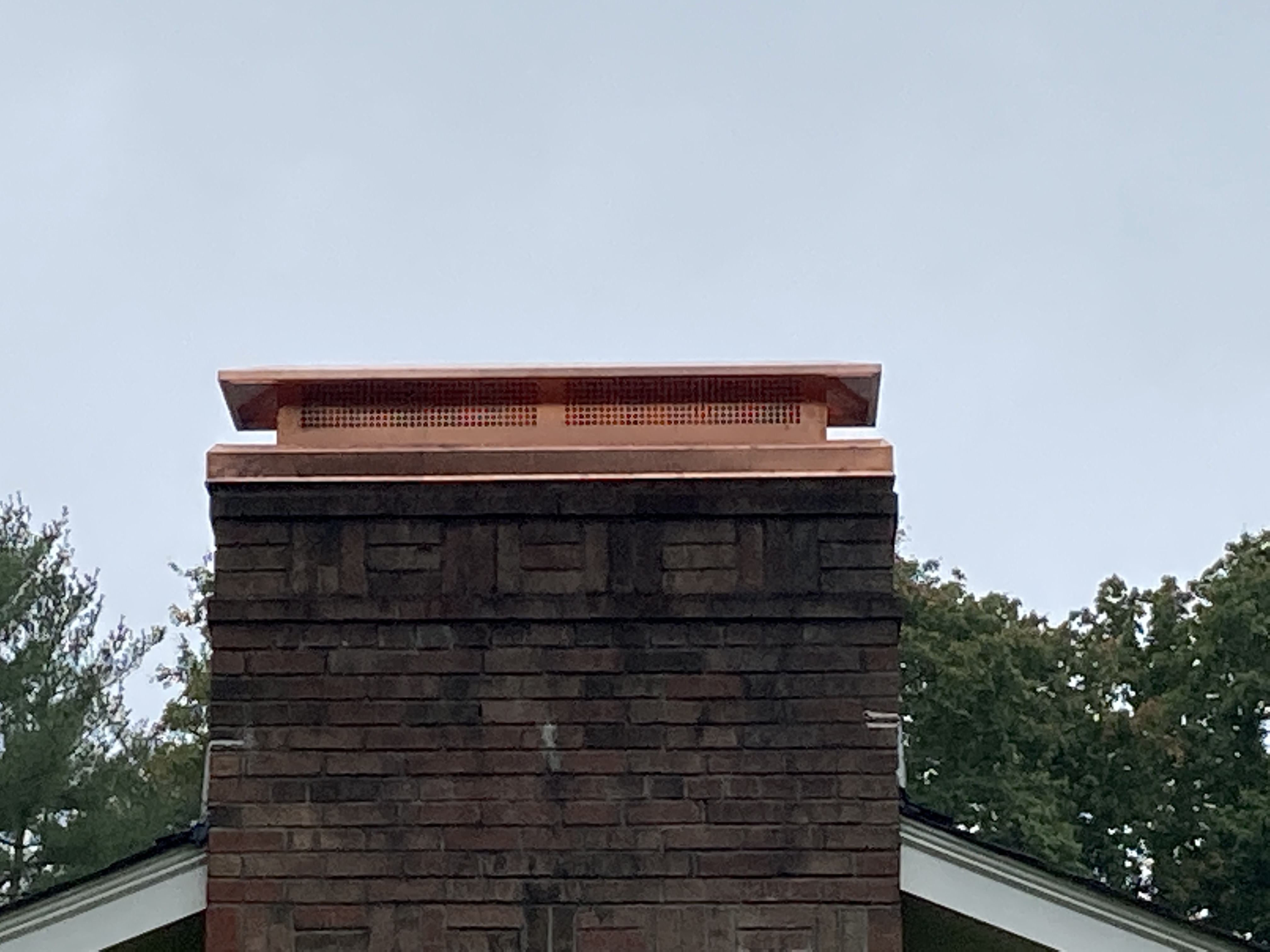
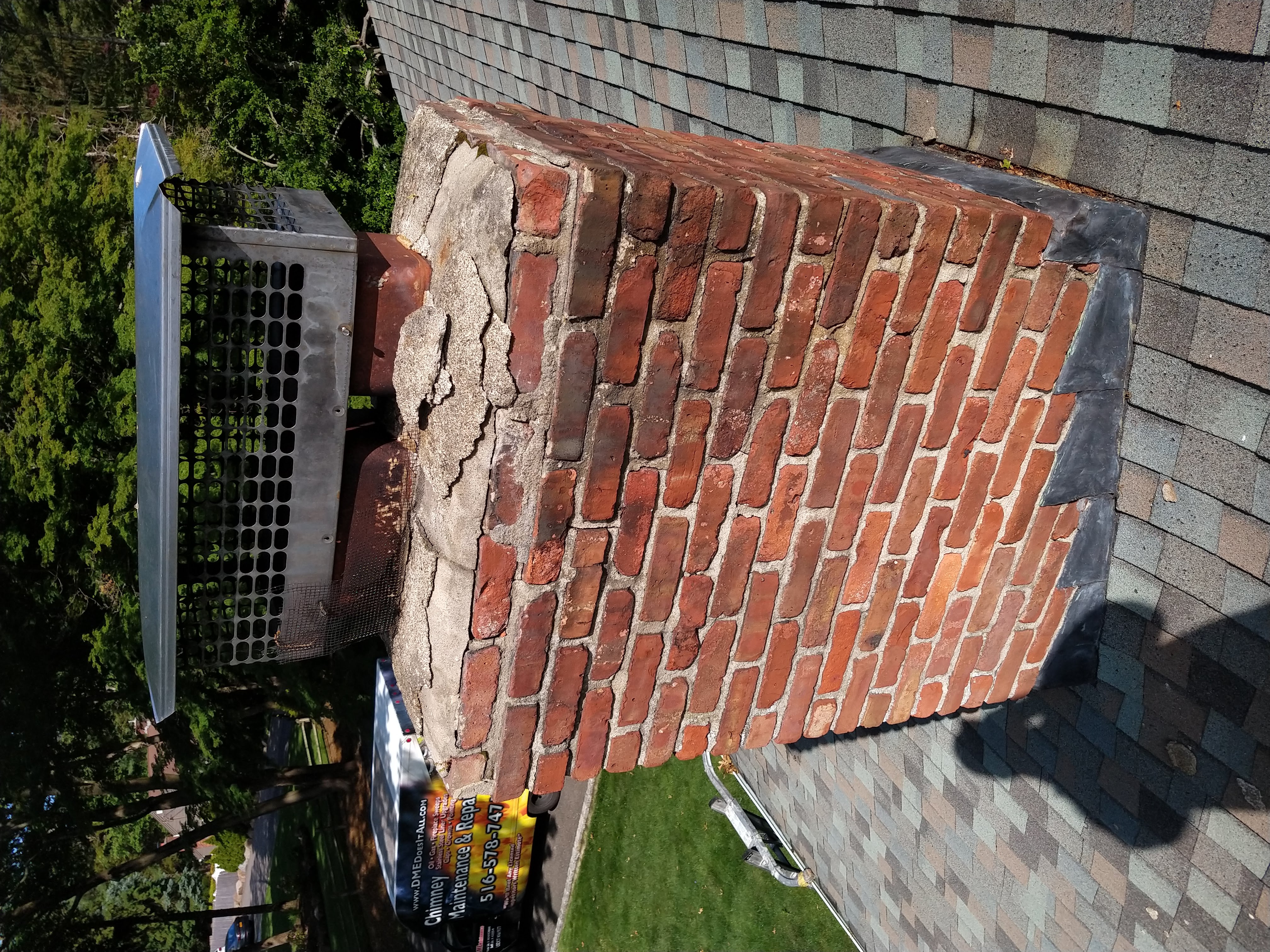
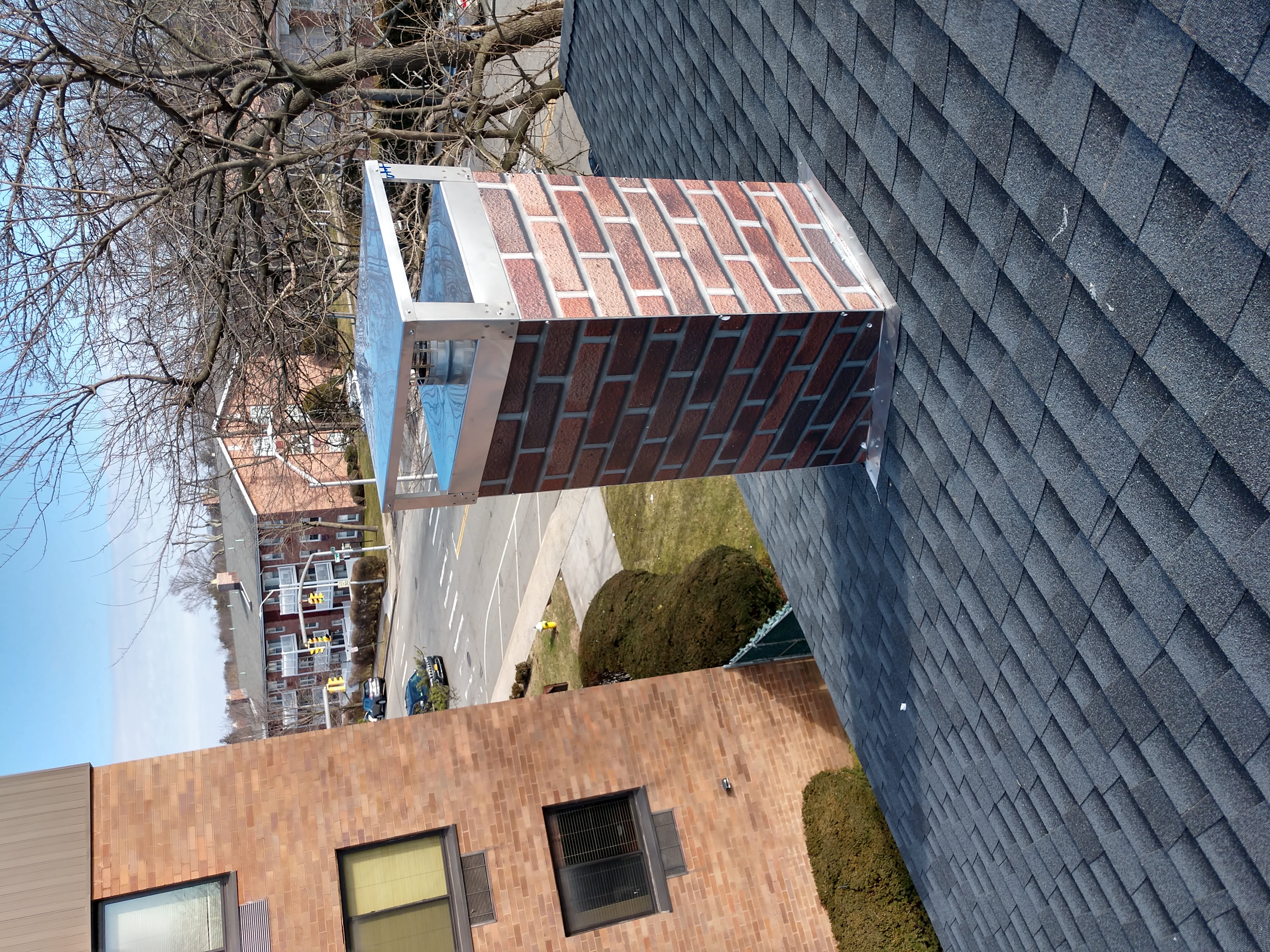
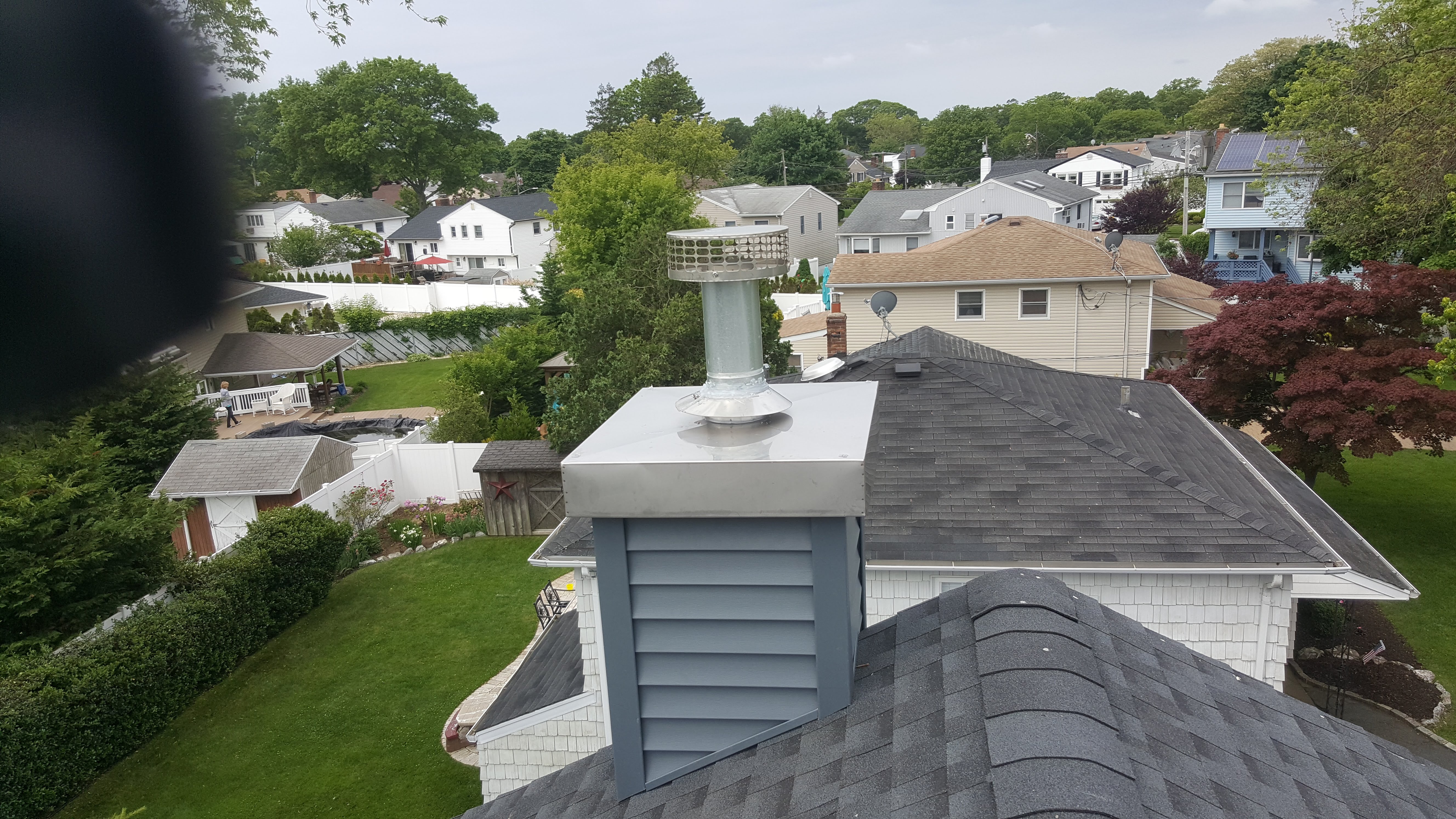
Your chimney crown sits at the very top of your heating system, where it faces the harshest weather on Long Island. This concrete or mortar cap covers the entire masonry structure and slopes outward to shed water away from the flue opening. Think of it as an umbrella for your chimney. When it cracks or deteriorates, rain and snow melt penetrate downward into the system. Oceanside homeowners who heat with oil rely on their chimneys year-round. A failing crown can compromise that entire operation in just one season.
The crown's job is straightforward but important. It must slope away from the flue tile so water runs toward the edges of the chimney instead of pooling around the opening. Most crowns fail because of age, freeze-thaw cycles, or poor original construction. Homes in Oceanside often date back 40 to 60 years, and many original crowns were built with standard mortar instead of the superior concrete that resists moisture and weather better. As salt air from Long Island Sound travels inland, it accelerates deterioration even faster. Your crown doesn't get a second chance once cracks appear.
Water infiltration through a damaged crown creates a cascade of problems inside your chimney. It soaks the flue tiles, rusts the damper, stains interior walls, and promotes dangerous mold growth. Oceanside residents may notice damp spots on the ceiling or walls near the chimney first. By that point, water has already been working its way through the masonry for months. The moisture also weakens the mortar joints between bricks, threatening the structural integrity of the entire chimney. Catching crown damage before winter is critical for homes on Long Island that depend on heating systems connected to their chimneys.
Visible cracks in the crown are the clearest warning sign, but not the only one. Spalling concrete, where pieces of the crown break away and fall into your yard, indicates advanced deterioration. Missing mortar or chunks of the crown missing entirely mean water entry is already happening. Some crowns simply lack proper overhang beyond the chimney edge, allowing water to run down the exterior masonry instead of dripping clear. Oceanside homeowners planning to sell should know that buyers' inspectors always examine the crown closely. A damaged crown can derail a transaction or force you to repair it before closing.
Seasonal timing matters when you're dealing with chimney crown problems. Spring rains test your crown's ability to shed water quickly. Summer heat stresses existing cracks, making them wider. Fall brings debris that can trap moisture against the surface. Winter is when problems become emergencies, as freeze-thaw cycles crack weakened concrete and prevent proper drainage. Residents of Oceanside should schedule crown inspection and repair work before the heavy rain season arrives in fall. Waiting until December means you're repairing damage that's already occurring, not preventing it. DME Maintenance has served homes on Long Island since 2001, and we recommend addressing crown issues as soon as you notice them.
A damaged crown also affects the flashing where your chimney meets the roof. Water running down a compromised crown can pool behind the flashing and seep into the attic space. This creates interior damage that's far more expensive to repair than the crown itself. Homes in Oceanside sit in an environment where moisture is abundant, with proximity to Long Island Sound and seasonal ocean-influenced weather patterns. The combination of salt air and constant moisture makes crown failure happen faster here than in drier inland areas. Protecting your roof's integration with the chimney depends directly on protecting the crown above it.
The repair approach depends on the extent of damage. Minor cracks may be sealed with specialized mortar that bridges the gap and prevents water entry. Larger cracks, spalling, or missing sections usually require crown rebuilding or replacement. A proper crown is sloped, has adequate overhang, includes proper flashing integration, and is constructed from concrete designed to resist freeze-thaw damage. When DME Maintenance rebuilds crowns for Oceanside residents, we ensure correct slope, proper thickness, and long-lasting materials. This isn't a surface-level patch job. A rebuilt crown protects your entire chimney system and your home's interior for decades.
Oceanside homeowners often ask whether they can delay crown repairs until spring. The honest answer is that every rain storm you face with a damaged crown risks new water entry. Winter weather is hardest on compromised masonry. If your crown shows cracks or spalling now, those conditions will worsen dramatically once freeze-thaw cycles begin. Even a small crack can widen significantly after just a few freezing nights. The cost of repairing interior water damage always exceeds the cost of fixing the crown first. Taking action now prevents expensive problems later.
Homeowners throughout Oceanside have trusted DME Maintenance for chimney cleaning, liner installation, and masonry repairs since 2001. We are a local, Long Island-based, owner-operated company — not a franchise — so when you call, you reach someone who actually knows Oceanside and the surrounding communities.
DME Maintenance has been protecting homes on Long Island since 2001 under the ownership of Douglas Eberling. Our licensed team understands the specific challenges that chimneys face in the Oceanside area. We inspect crowns thoroughly, identify the root cause of failure, and recommend the repair approach that will keep your chimney protected longest. Whether your crown needs sealing, patching, or complete rebuilding, we handle the work with the care your home deserves. We're not here to upsell you; we're here to give you honest assessment and reliable solutions.
Don't let your chimney crown wait until winter weather arrives. If you've noticed cracks, missing pieces, spalling concrete, or water stains near your chimney, call DME Maintenance today at 516-690-7471. We serve Oceanside and throughout Nassau County, NY, and we schedule inspections quickly during the busy season. Crown damage worsens fast, but fixing it is straightforward when you act now. Reach out to me and protect your home before the heavy rains and freezing temperatures arrive.